There is a moment, somewhere on the trail near Ghangaria, where the air changes. The sharp scent of pine needles gives way to something sweeter, almost intoxicating. You are breathing in the Bhyundar Valley, and if you have timed your journey correctly, you are about to step into a living, breathing canvas. The Valley of Flowers Uttarakhand is not just a destination; it is a fleeting Himalayan masterpiece that reveals itself fully for only a few months each year.
As someone who has spent years walking these high-altitude paths, I often get asked the same question: when is the absolute best time to go? The answer is rarely a single date. It depends on whether you want the lush, rain-washed greenery of early monsoon or the serene, golden solitude of autumn. This guide is designed to help you navigate those seasonal shifts and time your adventure to perfection.
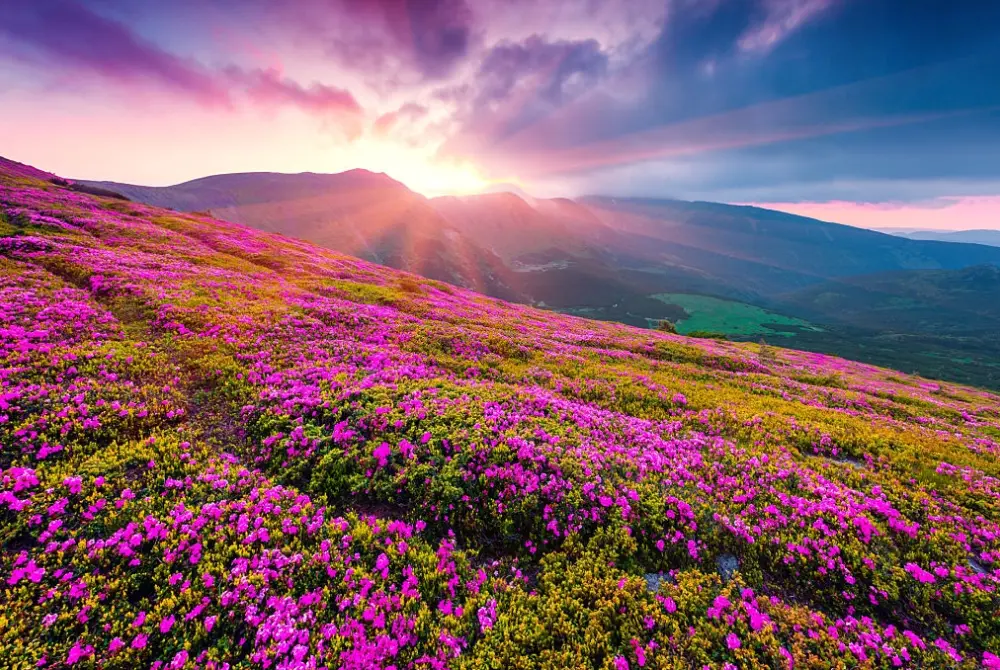
Table of Contents
About Varieties of Flora in the Valley of Flowers National Park
The magic of this UNESCO World Heritage Site lies in its biodiversity. It is home to over 500 species of flowers, but you do not need to be a botanist to be moved by them.
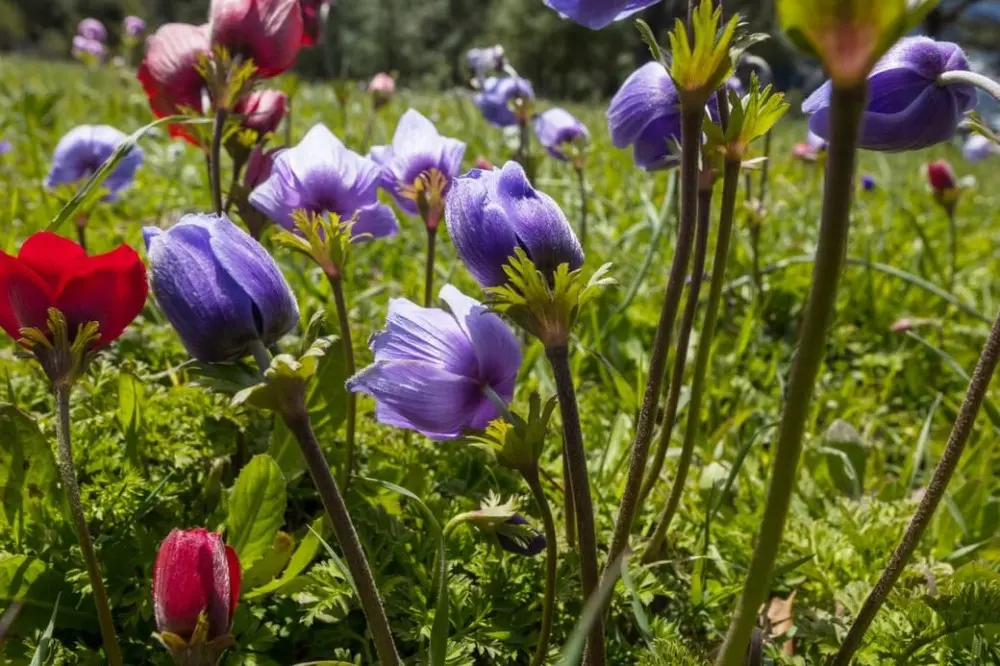
As you walk the meadows, look for the Himalayan Blue Poppy, which seems to capture the very essence of the mountain sky. Keep your eyes peeled for the Brahma Kamal, a sacred flower that blooms only at high altitudes. You will also find swathes of Himalayan Balsam, Anemones, and the striking Cobra Lily. The most fascinating aspect is that the floral composition changes every few weeks. Every visit feels like you are walking through a different garden.
Month-by-Month Breakdown
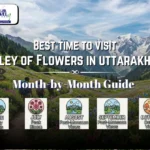
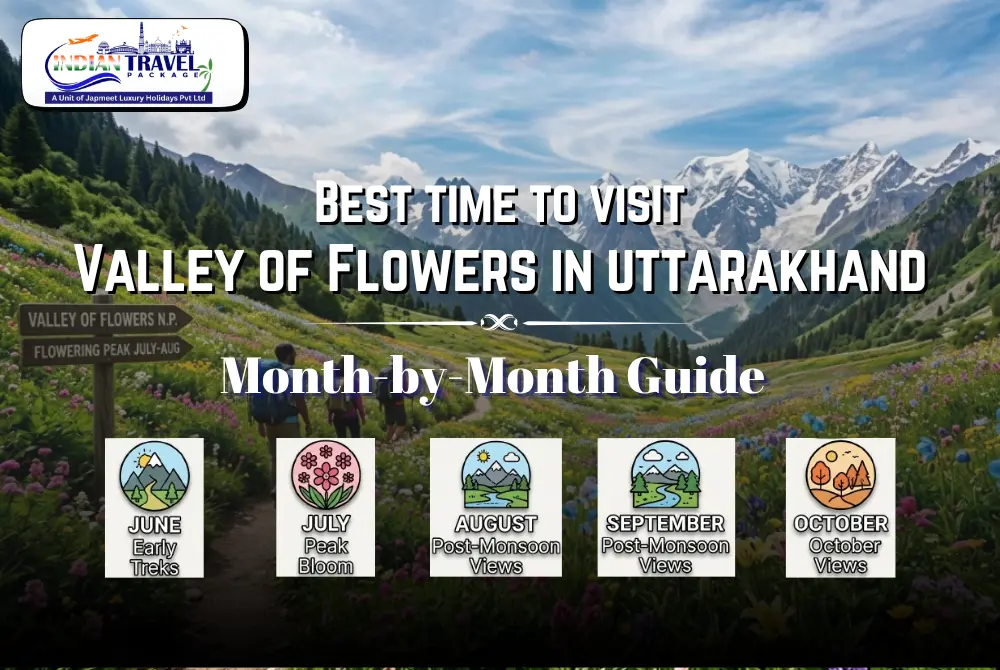
Knowing the best time to visit valley of flowers means understanding how the landscape transforms as the snow retreats and the monsoon clouds roll in. Each month offers a distinct personality, ranging from the fresh, quiet beginnings of summer to the golden, crisp serenity of autumn.
June: The Fresh Awakening
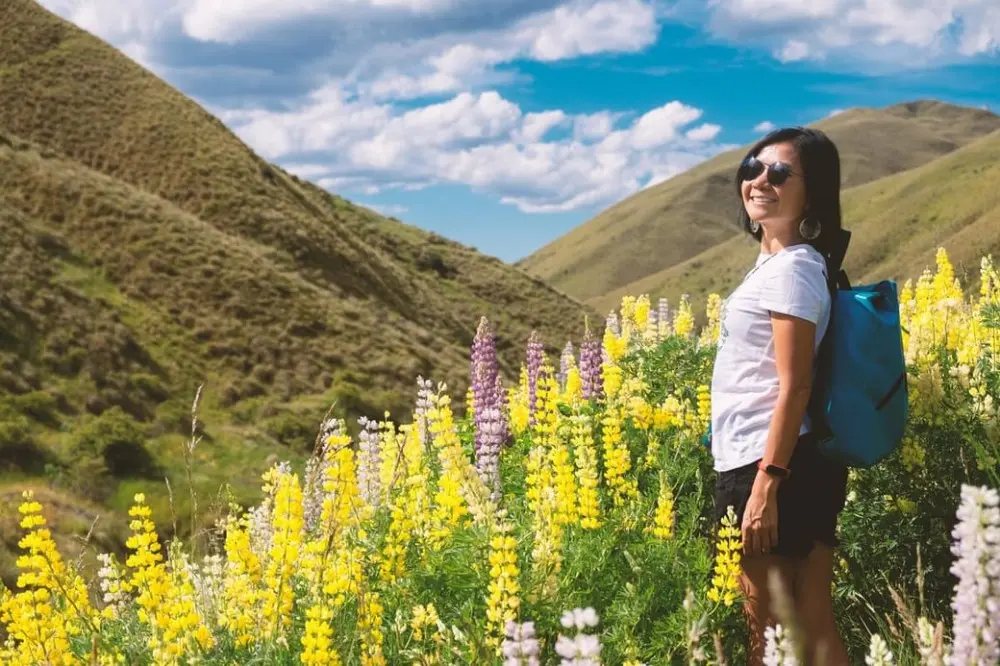
The valley officially opens on June 1st. If you visit early in the month, you are witnessing the mountains shaking off the remnants of winter. It is a time of lush greenery as the snow melts, feeding the alpine streams. While you won’t see the famous peak blooms yet, you will spot early floral species like the Marsh Marigold and Wild Strawberry.
- Temperature: Typically ranges between 10°C and 18°C.
- Rain Opportunity: Very low. You might experience light, occasional drizzles, but the trails remain largely dry and accessible.
- Why Visit Now: It is perfect if you prefer solitude and crisp, clear mountain views before the monsoon crowds arrive.
July: The Monsoon Bloom Begins
By mid-July, the monsoon rains arrive, and with them, the valley undergoes a dramatic transformation. This is when the landscape shifts from vibrant green to a mosaic of colors. Species like Anemones and the rare Ladies Slipper Orchid begin to paint the meadows.
- Temperature: A pleasant 8°C to 16°C.
- Rain Opportunity: Moderate. You should be prepared for frequent evening showers and a fair amount of mist that clings to the valley floor.
- Why Visit Now: It is the start of the “blooming magic.” The trails are lush, and you get to experience the valley while it is still relatively uncrowded.
August: The Peak of the Spectacle
August is, without question, the zenith of the floral season. If you are a photographer or a botanist, this is when you want to be here. The meadows are blanketed in a thick tapestry of Brahma Kamal, Himalayan Blue Poppies, and Balsam. The valley feels alive, almost overflowing with life.
- Temperature: A comfortable 7°C to 14°C.
- Rain Opportunity: High. Expect heavy, intermittent rainfall, often accompanied by dense fog that gives the valley a mystical, almost ethereal quality.
- Why Visit Now: This is the best time for valley of flowers trek if you want to see the maximum diversity of floral species in full glory.
September: The Golden Transition
As the monsoon rains begin to taper off, the valley takes on a serene, meditative quality. While many of the mid-summer blooms begin to fade, the meadows remain lush, and the skies often clear up, offering panoramic vistas of the surrounding peaks that are often hidden by monsoon mist.
- Temperature: Cooler, ranging from 5°C to 12°C.
- Rain Opportunity: Low. The rains have significantly retreated, resulting in drier, more stable trekking conditions.
- Why Visit Now: It is the best time for those who enjoy peaceful trails and clear, crisp air. The valley shifts toward golden and bronze autumnal hues, offering a different kind of beauty.
October: The Final Curtain
By October, the valley is preparing for its long winter slumber. Most of the flowers have finished their life cycle, leaving behind a rugged, stark beauty. The air becomes incredibly sharp, and the days grow shorter.
- Temperature: Drops quickly, often ranging between -5°C and 5°C as the month progresses.
- Rain Opportunity: Minimal, but there is a real chance of early-season snow showers at higher altitudes.
- Why Visit Now: This is for the offbeat traveler who appreciates the silence of the mountains and the raw, unadorned structure of the Himalayan landscape before the official seasonal closure.
Things to Do & Nearby Attractions
While the national park itself is the main draw, the journey offers so much more. Many trekkers spend their time wandering the Pushpawati riverbed, where the interplay of light on the water against the backdrop of distant glaciers is enough to stop you in your tracks.
Pairing with Hemkund Sahib Trek
Because the base camp for both the Valley of Flowers and Hemkund Sahib is the village of Ghangaria, it is natural to combine them into a single journey. Most travelers dedicate one day to the vibrant floral meadows and another to the steep, meditative climb toward the glacial lake of Hemkund Sahib. It is a challenging transition from the delicate beauty of the valley to the rugged, spiritual intensity of the high-altitude Gurudwara, but it is an experience that stays with you long after you descend.
If you are planning your logistics for this dual journey, exploring reliable stay options in Ghangaria is the first step toward a comfortable trip.
Common Misconceptions About Visiting the Valley of Flowers
A common mistake is thinking you can spend all day inside the park. There is a strict rule: you must be out of the valley by late afternoon. This is not just a bureaucratic guideline; it is a matter of safety. The weather in these heights turns in minutes, and the valley is home to Himalayan wildlife that becomes active at dusk.
Another misconception is that the trek is easy. While the valley of flowers trek km count is manageable, the altitude is real. It is a trek that demands respect. You do not need to be an athlete, but you should have a baseline of physical fitness and a willingness to pace yourself.
Frequently Asked Questions
Is the Valley of Flowers trek worth it?
Absolutely. It is rare to find a place where the landscape feels so alive. It is less of a trek and more of a pilgrimage into the heart of nature.
How many days are needed for the trek?
A standard, comfortable itinerary takes 6 days, allowing for travel from Rishikesh, acclimatization in Joshimath, and the trek up to Ghangaria and beyond.
Is there snowfall in the Valley of Flowers?
During the trekking season of June through October, you are unlikely to encounter heavy snow, though you might see light dustings in October. The valley remains snowbound and closed from November to May.
What is the best time for Valley of Flowers trek?
For the most vibrant blooms, aim for the window between mid-July and mid-August. If you prefer avoiding the monsoon crowds, late August to early September is often a sweet spot.