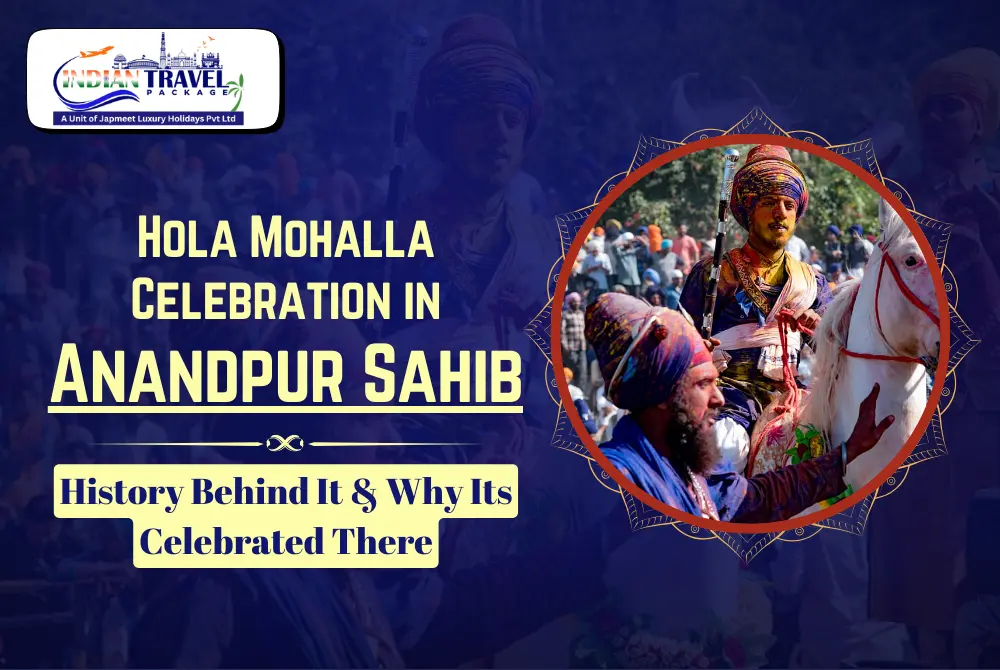
As the spring sun warms the foothills of the Shivalik Range in Punjab, a transformation occurs in the historic city of Anandpur Sahib. While much of India is draped in the playful pastels of Holi, this sacred “City of Bliss” takes on a different hue. Here, the air does not just carry clouds of gulal but also the rhythmic beat of war drums, the scent of horse-pressed earth, and the gleaming reflection of sunlight on steel.
For the traveler arriving from North America, the sight is nothing short of cinematic. It is a living exhibition of a warrior-saint tradition that has remained unbroken for over three centuries. To understand hola mohalla in anandpur sahib, one must look past the festivities and into the heart of a history defined by resilience, sovereignty, and a unique spiritual discipline.
Key Details of Hola Mohalla 2026 Anandpur Sahib Celebration
- Location: Takht Sri Keshgarh Sahib, Anandpur Sahib, Punjab.
- Dates: March 4–6, 2026 (Wednesday to Friday).
- Main Attraction: Thousands of Nihang Singhs in traditional blue attire demonstrate martial skills and bravery.
- Significance: A display of the Khalsa warrior spirit, featuring mock battles and devotional music.
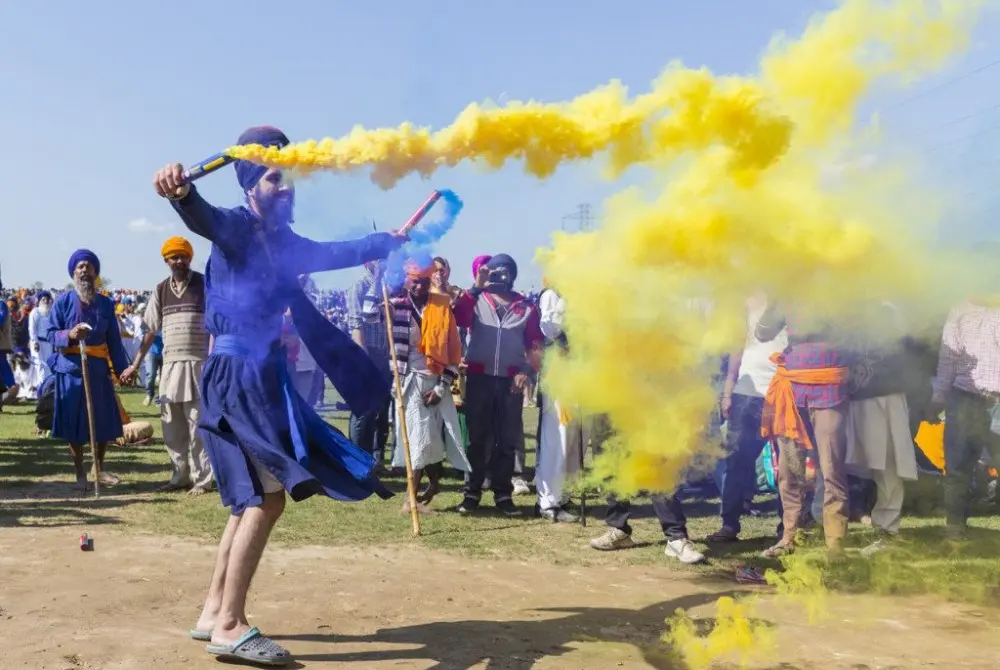
Table of Contents
What is Hola Mohalla and Why is it Celebrated?
To define this event for a modern audience, it is best to look at the words themselves. The term “Hola” is derived from the Punjabi word for a military charge or onset. “Mohalla” refers to an organized procession or a mock battle. Unlike the traditional Holi, which finds its roots in the Puranic legend of Prahlad and Holika, Hola Mohalla was established as a day for the Khalsa Panth to demonstrate their military preparedness and athletic skill.
The core reason for this celebration is the preservation of the “Bir Ras” or the heroic essence of the soul. It serves as a reminder that spirituality and strength are not mutually exclusive. In the Sikh tradition, a person is encouraged to be a “Sant-Sipahi,” a Saint-Soldier who is as devoted to meditation as they are to the protection of the oppressed.
The Historical Genesis: 1701 and the Holgarh Fort
The year 1701 marked a pivotal moment in the history of the Punjab region. At this time, the tenth Sikh Guru, Guru Gobind Singh Ji, was leading a community that faced constant existential threats from the surrounding hill chiefs and the Mughal Empire.
Guru Gobind Singh Ji recognized that his people needed more than just a day of leisure. He wanted to channel the festive energy of spring into something that would fortify the spirit of his followers. On the day following Holi in 1701, he gathered his Sikhs at the Holgarh Fort in Anandpur Sahib. Instead of the traditional play with colors, he organized a day of mock battles, archery contests, and wrestling matches.
By doing this, the Guru shifted the focus from a mythological celebration to a practical demonstration of sovereignty. He wanted to ensure that the Khalsa would never be caught off guard. This was not merely about combat; it was about building a psychological state of “Chardikala,” or eternal optimism and high spirits, even in the face of immense adversity. This tradition has continued every year since, making Anandpur Sahib the spiritual epicenter for this display of valor.
Why Anandpur Sahib? The Sacred Geography
For many international visitors, the name Anandpur Sahib translates to “The City of Divine Bliss.” Founded by Guru Tegh Bahadur Ji in 1665, the city is geographically nestled between the Sutlej River and the Shivalik Hills.
The city holds deep significance because it is the birthplace of the Khalsa. It was here, in 1699, that the formal order of the Sikh faith was established. When you walk through the white marble courtyards of Takht Sri Keshgarh Sahib during the festival, you are standing on the very ground where the first five Sikhs were initiated.
The terrain around the city, with its rolling hills and open plains, provided the perfect natural amphitheater for the cavalry maneuvers and military drills that define the festival. Today, that same geography allows hundreds of thousands of pilgrims to congregate, camp, and participate in a communal experience that feels like stepping back into the 18th century.
Rituals of the Brave: What Happens During the Celebration?
The festival is a multi-day event that builds to a thundering crescendo. For a visitor from the USA, the sensory details are overwhelming in the best possible way.
The Nihang Processions
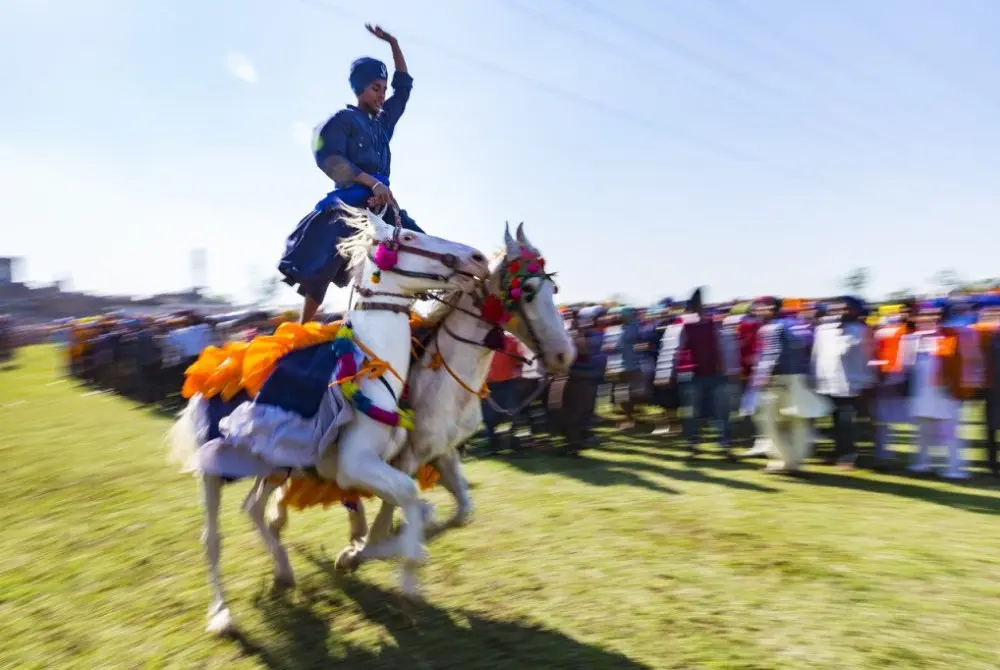
The most striking figures at the festival are the Nihang Sikhs, often called the “Akalis” or the Immortals. Dressed in electric blue tunics with towering turbans adorned with steel quoits and insignias, they are the traditional guardians of the faith. Seeing them march through the streets of Anandpur Sahib is like witnessing history in motion. Their presence is a reminder of the standing army that once defended this land.
Gatka and Shastar Vidya
In the open fields known as the Charanganga, you will see circles of people gathered around martial artists. This is where Gatka is performed. It is a traditional Sikh martial art that uses wooden sticks to simulate swords. However, the more experienced warriors often demonstrate “Shastar Vidya,” the science of weapons, using real swords, shields, and spears. The speed and precision of these movements are a testament to years of disciplined practice.
Tent Pegging and Horsemanship
One of the most thrilling sights for a discerning traveler is the equestrian display. Nihang warriors perform tent pegging, where a rider gallops at full speed and attempts to pick up a small wooden peg from the ground with a lance. You might even see riders standing balanced on the backs of two galloping horses simultaneously. The bond between the warrior and the horse is central to the history of the Punjab, and it is showcased here with incredible flair.
Langar and Seva: The Heart of the Community
Amidst the displays of strength, there is a profound undercurrent of humility. Huge communal kitchens, or Langars, are set up across the city. Regardless of your background, religion, or social status, you are invited to sit on the floor and share a meal. The scale of this operation is staggering. Thousands of volunteers spend their days stirring massive cauldrons of lentils and rolling thousands of rotis. For a visitor, participating in this seva, or selfless service, is often the most moving part of the journey.
Comparing Traditions: Holi vs. Hola Mohalla in Punjab
It is helpful to understand how these two celebrations coexist. While they happen at the same time, their objectives are distinct:
- Focus: Holi focuses on the triumph of good over evil through the legend of Prahlad and the play of colors. Hola Mohalla focuses on the readiness of the soul and body through military drills and poetry.
- Expression: Holi is often celebrated with music, dancing, and the throwing of powders. Hola Mohalla is celebrated with “Nagaras” (war drums), “Kirtan” (devotional singing), and “Dhadi Vars” (ballads of heroism).
- Location: While Holi is celebrated in homes and streets across India, the heart of Hola Mohalla is localized in the historic gurdwaras and fields of Anandpur Sahib.
This distinction is important for those wanting to experience the true culture of the region. It shows that the Sikh faith took a common cultural moment and infused it with a specific purpose that aligned with their values of bravery and protection.
Planning Your Visit: A Guide for the Discerning Traveler
Attending hola mohalla in anandpur sahib requires some preparation, especially for those traveling from North America who are accustomed to specific comforts.
When to Go
The festival follows the lunar calendar, usually falling in March. It is essential to check the exact dates a few months in advance. The final day is the most spectacular, but arriving a day or two early allows you to see the city prepare and enjoy the more intimate evening prayers and poetry sessions.
Where to Stay
While Anandpur Sahib has many pilgrim accommodations, luxury travelers often prefer to stay in nearby cities. Many choose to base themselves in Chandigarh, which is about a two-hour drive away and offers high-end international hotel chains. Alternatively, if you are exploring the wider region, you might consider extending your stay to see the Golden Temple. For those looking for top-tier comfort during their Punjab circuit, do read this guide on a luxury hotel in Amritsar, which can help you plan a seamless transition from the rugged energy of Anandpur Sahib to the refined atmosphere of the holy city.
What to Wear and Etiquette
Respect is the cornerstone of any visit to a sacred site. Both men and women should keep their heads covered inside the gurdwara complexes. Carrying a simple scarf or bandana is sufficient. Dress modestly in loose, comfortable clothing. As you will be walking through fields and crowded streets, sturdy footwear is a must, though you will need to remove your shoes before entering any temple area.
Photography
The festival is a photographer’s dream. The vibrant blues of the Nihang uniforms, the dust of the horse charges, and the white marble of the architecture provide endless inspiration. However, always ask for permission before taking close-up portraits of individuals, especially during prayer or while they are preparing for a performance. Most people are incredibly friendly and proud to share their culture with visitors.
The Living Legacy of Guru Gobind Singh
The celebration of Hola Mohalla is not a reenactment of a dead history. It is a vibrant, living tradition that continues to shape the identity of the Sikh community. For the USA-based traveler, it offers a rare glimpse into a culture that manages to be modern and global while remaining fiercely loyal to its 17th-century roots.
Walking through the crowds in Anandpur Sahib, you see tech professionals from California sitting alongside farmers from rural Punjab and warriors who look like they stepped out of an ancient painting. They are all there for the same reason: to honor a legacy of courage and to drink from the well of spiritual bliss that the city offers.
The “Reasons Why Sikhs Celebrate Hola Mohalla in Anandpur Sahib” go beyond the surface of a festival. It is about the celebration of the human spirit’s ability to remain unconquered. It is about the “Sant-Sipahi” ideal that tells us we can be gentle in our hearts but firm in our principles.
Frequently Asked Questions
What is the meaning of the word ‘Mohalla’?
The word Mohalla is derived from an Arabic root meaning “alighting” or “descending.” In the Punjabi context, it refers to an organized military procession or a mock attack. Combined with Hola (the masculine form of Holi), it signifies a “brave military charge.”
Why is Anandpur Sahib the main location for this festival?
Anandpur Sahib is the birthplace of the Khalsa (the initiated Sikh community). Because Guru Gobind Singh Ji founded the order here in 1699 and held the inaugural Hola Mohalla in 1701, the city remains the eternal headquarters for this celebration. It holds the “Takht” (throne) of Keshgarh Sahib, one of the five highest seats of authority in Sikhism.
Who started Hola Mohalla and when?
The tradition of Hola Mohalla was started by the tenth Sikh Guru, Guru Gobind Singh Ji, in the year 1701. The first event was held at the Holgarh Fort in Anandpur Sahib to ensure the Sikh community remained physically fit and battle-ready against the oppressive forces of the time.
Why is Hola Mohalla celebrated for three days?
The three-day duration allows for a structured progression of the festival. The initial days are dedicated to spiritual gatherings, kirtan (devotional singing), and poetry recitals. This builds up to the final day, which features the grand “Mohalla” or military-style procession where Nihang warriors demonstrate their equestrian and martial skills.
What is the best way to reach Anandpur Sahib?
The most convenient way for international travelers is to fly into Sri Guru Ram Dass Jee International Airport in Amritsar or the Chandigarh International Airport. From there, you can hire a private car for the journey to Anandpur Sahib.
What is the difference between Holi and Hola Mohalla?
While both occur in spring, their purposes are distinct. Holi is a festival of colors celebrating the victory of good over evil through the legend of Prahlad. Hola Mohalla, established by Guru Gobind Singh Ji, is a festival of valor. Instead of playing with colors, Sikhs participate in martial arts (Gatka), mock battles, and military processions to celebrate the spirit of the Saint-Soldier.
Is it safe for international tourists?
Yes, the festival is a community-focused event. While the crowds can be very large, the atmosphere is generally one of disciplined celebration. It is always wise to travel with a local guide or as part of an organized tour to navigate the logistics and language.
Can non-Sikhs attend Hola Mohalla?
Absolutely. The Sikh faith is built on the principle of universal brotherhood. Visitors from all backgrounds are welcomed with open arms, provided they follow the local customs of respect and modesty.