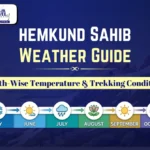
The journey to Sri Hemkund Sahib is more than just a trek. Located at a staggering altitude of 15,225 feet in the Chamoli district of Uttarakhand, this sacred Sikh shrine offers a unique blend of spiritual peace and rugged Himalayan beauty. Because of its extreme elevation, the climate of Hemkund Sahib remains distinct from the rest of the Garhwal region.
For any traveler, understanding the Hemkund Sahib weather conditions is the first step in planning a safe and successful pilgrimage. The trek typically opens in late May and closes by early October. Outside of these months, the region is buried under several feet of snow, making it inaccessible.
Before you finalize your dates, you should also check the official Hemkund Sahib Yatra opening and closing dates to ensure the trails are open for transit.
Table of Contents
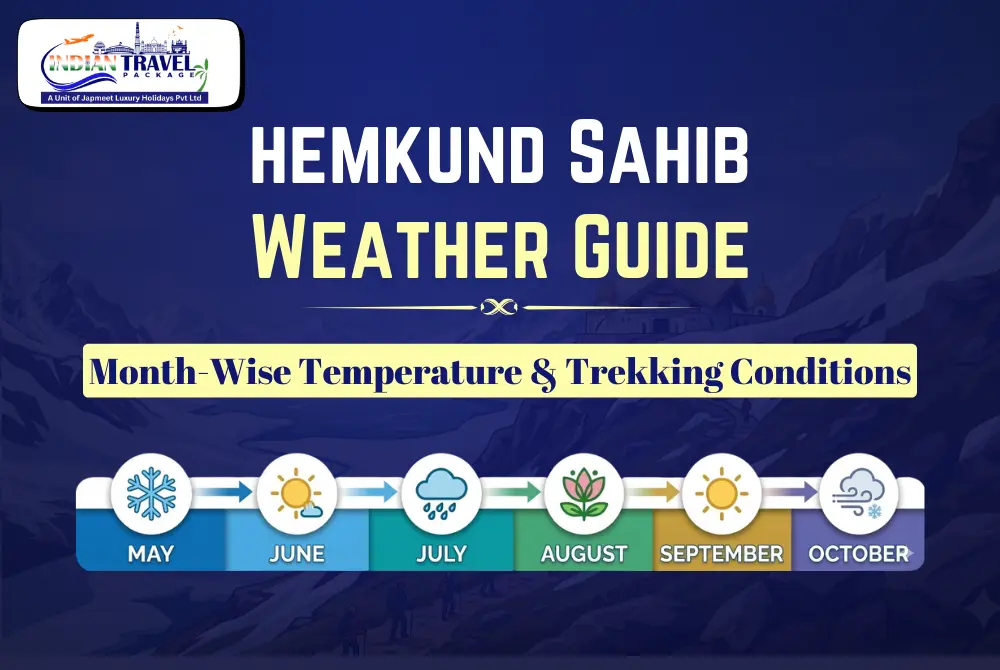
Hemkund Sahib Seasonal Temperature Variation at a Glance
The Hemkund Sahib temperature variation is significant between day and night. While the sun can feel quite strong during the day due to the thin atmosphere, temperatures plummet as soon as the sun sets.
| Month | Average Day Temp | Average Night Temp | General Conditions |
| May | 10°C | -2°C | Heavy snow on tracks |
| June | 16°C | 4°C | Clear skies, melting snow |
| July | 17°C | 7°C | Monsoon onset, misty |
| August | 18°C | 8°C | Peak rain, lush greenery |
| September | 14°C | 2°C | Excellent visibility |
| October | 8°C | -5°C | Intense cold, frost |
Detailed Month-wise Hemkund Sahib Weather Breakdown

Hemkund Sahib Weather in May
If you choose to visit in May, you will be among the first pilgrims of the season. The Hemkund Sahib weather in late May is dominated by winter’s leftovers. You will encounter massive snow walls, some reaching 10 feet in height, flanking the trekking path. The lake is often still partially frozen. You must carry heavy woolens and high-quality trekking boots with a good grip to navigate the slippery snow patches.
Hemkund Sahib Weather in June
June is arguably the most popular month for the Yatra. The Hemkund Sahib temperature becomes more comfortable for walking, and the snow starts receding rapidly. This is a great time for those who want to see the glacial lake in its transition phase. Since the skies are usually clear, you get breathtaking views of the surrounding peaks. This is also a peak period for travel, so expect a vibrant atmosphere with many fellow pilgrims.
Hemkund Sahib Weather in July
As July begins, the monsoon starts to make its presence felt. The climate of Hemkund Sahib shifts from dry cold to a humid, misty environment. While the rain brings out the alpine flowers, it also makes the stone steps leading to the Gurudwara quite slick. You should pack a sturdy poncho and waterproof gear. If you are traveling from afar, perhaps taking the train from Delhi to Hemkund Sahib to the nearest railhead, ensure you have extra days in your itinerary to account for potential rain-related delays.
Hemkund Sahib Weather in August
August is the wettest month in the Valley of Flowers region. While the rain can be persistent, the landscape is at its greenest. This month is ideal for nature lovers who want to see the rare Brahma Kamal blooming near the lake. However, you must be prepared for low visibility due to heavy mist. Acclimatization at Ghangaria is particularly important here as the high humidity can sometimes make breathing feel slightly heavier for those not used to the altitude.
Hemkund Sahib Weather in September
Many experienced trekkers consider September to be the best time to visit Hemkund Sahib. The monsoon clouds depart, leaving behind washed-clean landscapes and unparalleled post-monsoon clarity. The Hemkund Sahib temperature in September starts to dip again, especially at night, but the daytime trekking conditions are nearly perfect. The crisp air and blue skies offer the best opportunities for photography.
Hemkund Sahib Weather in October
By October, the winter chill returns with full force. The Hemkund Sahib weather conditions become harsh as the closing date approaches. You will see frost on the ground in the mornings, and the oxygen levels at high altitude combined with the biting wind require good physical stamina. Only those who can handle sub-zero night temperatures should plan their visit during this final phase of the season.
Essential Tips for Your Journey
- Layering is Key: Do not rely on one heavy jacket. Use a three-layer system consisting of a moisture-wicking base, a warm fleece, and a waterproof outer shell.
- The 2 PM Rule: Regardless of the month, the glacial lake micro-climate can change instantly. Aim to reach the Gurudwara by 10 AM and start your descent by 2 PM to avoid afternoon clouds and temperature drops.
- Stay Hydrated: Even if the Hemkund Sahib temperature is low, your body loses water through breathing at high altitudes. Carry a reusable water bottle.
Preparing for the Divine Journey
Choosing the right time for your pilgrimage to Sri Hemkund Sahib is a balance between your physical comfort and the type of Himalayan beauty you wish to witness. Whether you are drawn to the dramatic snow walls of June, the vibrant floral tapestry of the monsoon months, or the serene, crisp air of September, each month offers a unique spiritual and sensory experience.
However, keep in mind that at an altitude of 15,225 feet, the mountain ultimately dictates the schedule. The climate of Hemkund Sahib is notoriously fickle, and even the best-laid plans require a degree of flexibility. By understanding the Hemkund Sahib temperature variation and preparing your gear accordingly, you ensure that your focus remains on the spiritual significance of the yatra rather than the challenges of the environment.
Safety should always remain your top priority. From ensuring proper acclimatization at Ghangaria to keeping a close watch on daily weather shifts, a well-informed traveler is a safe traveler. If you are feeling overwhelmed by the logistics of mountain weather and trekking permits, consider booking a guided package. Professional experts can handle the complexities of the terrain, allowing you to undertake this sacred journey with complete peace of mind.
The doors to the “Lake of Ice” are only open for a few months each year. We hope this guide helps you pick the perfect window for your visit.
Frequently Asked Questions (FAQs)
Which month is best to visit Hemkund Sahib?
The best month to visit Hemkund Sahib depends on your preference for scenery. If you wish to see massive snow walls and a partially frozen lake, June is ideal. However, for the best trekking weather, clear Himalayan views, and post-monsoon clarity, September is widely considered the best month. For those interested in the blooming flora of the region, August is the peak time, though you should be prepared for monsoon rains.
Is the Hemkund Sahib trek easy or difficult?
The Hemkund Sahib trek is classified as moderately difficult. While the path is well-paved with stone steps, the steep incline over a 6 km stretch from Ghangaria can be physically demanding. The most challenging factor is the altitude; since you will be ascending to over 15,000 feet, acclimatization at Ghangaria is essential to prevent altitude sickness. It is recommended that you maintain a steady pace and use trekking poles for support.
What is the height of Hemkund Sahib in feet?
The height of Hemkund Sahib above sea level is approximately 15,225 feet (4,632 meters). Due to this extreme height, the oxygen levels are significantly lower than in the plains. It is vital to monitor your breathing and stay hydrated throughout the ascent to manage the effects of the high-altitude climate.
Can senior citizens do the Hemkund Sahib trek?
Yes, senior citizens can perform the yatra, provided they are in good health and have consulted a doctor. To make the journey more comfortable, pony services and “palkis” (palanquins) are available from Govindghat and Ghangaria. We recommend that seniors plan their visit in June or September to avoid the slippery paths caused by the July and August rains.
What necessary things should I pack according to the Hemkund Sahib weather conditions?
Regardless of the month you visit, you should pack in layers. Essential items include thermal inner-wear, a warm fleece or down jacket, waterproof gloves, and a high-quality raincoat or poncho. Because the Hemkund Sahib temperature variation is extreme, having gear that you can easily put on or take off is the most efficient way to stay comfortable.